

Blog
Pearls in British India Trade Royalty and Cultural Legacy

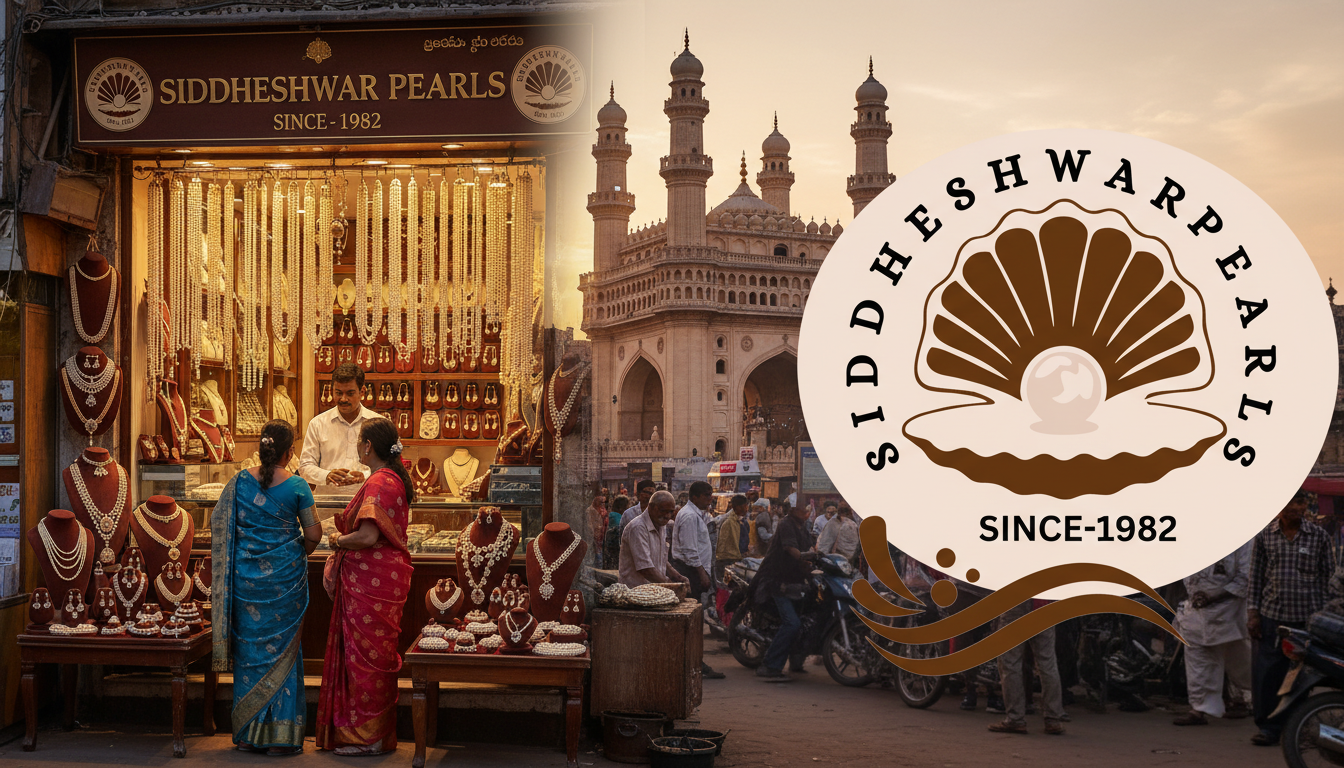
In this blog we will explore the role of pearls in British India, their connection to royalty, the pearl trade system, and their cultural legacy that continues even today.
Introduction
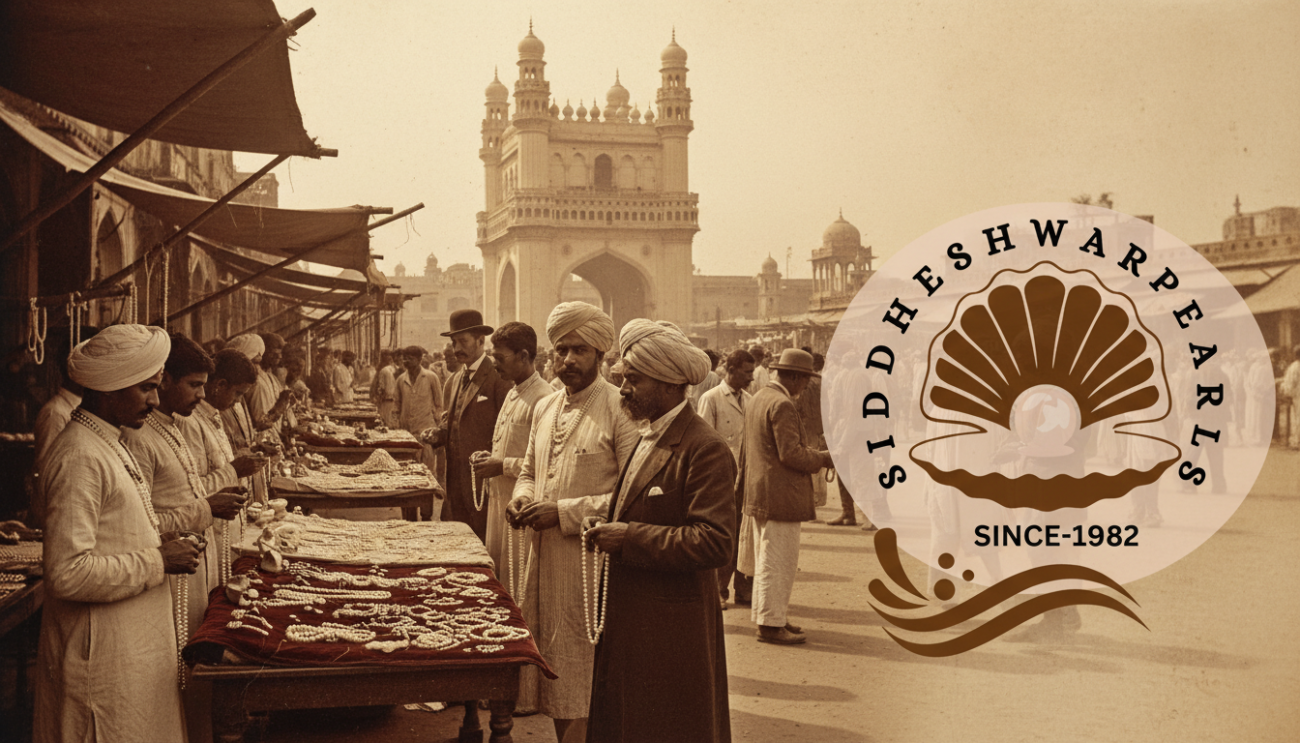
Pearls of India also known as Siddheshwar Pearls store have always symbolized purity, royalty, and timeless beauty.For centuries, India has been one of the most important centers for pearl trade and craftsmanship. During the British period, pearls gained even more value as they became a symbol of wealth, power, and royal fashion. From Indian rulers to British officials, pearl jewellery was admired and widely traded across regions. Cities like Hyderabad became famous for their pearl markets, especially near Charminar, where traders sold rare and high-quality pearls.
The Importance of Pearls in Indian History
Pearls Before the British Period
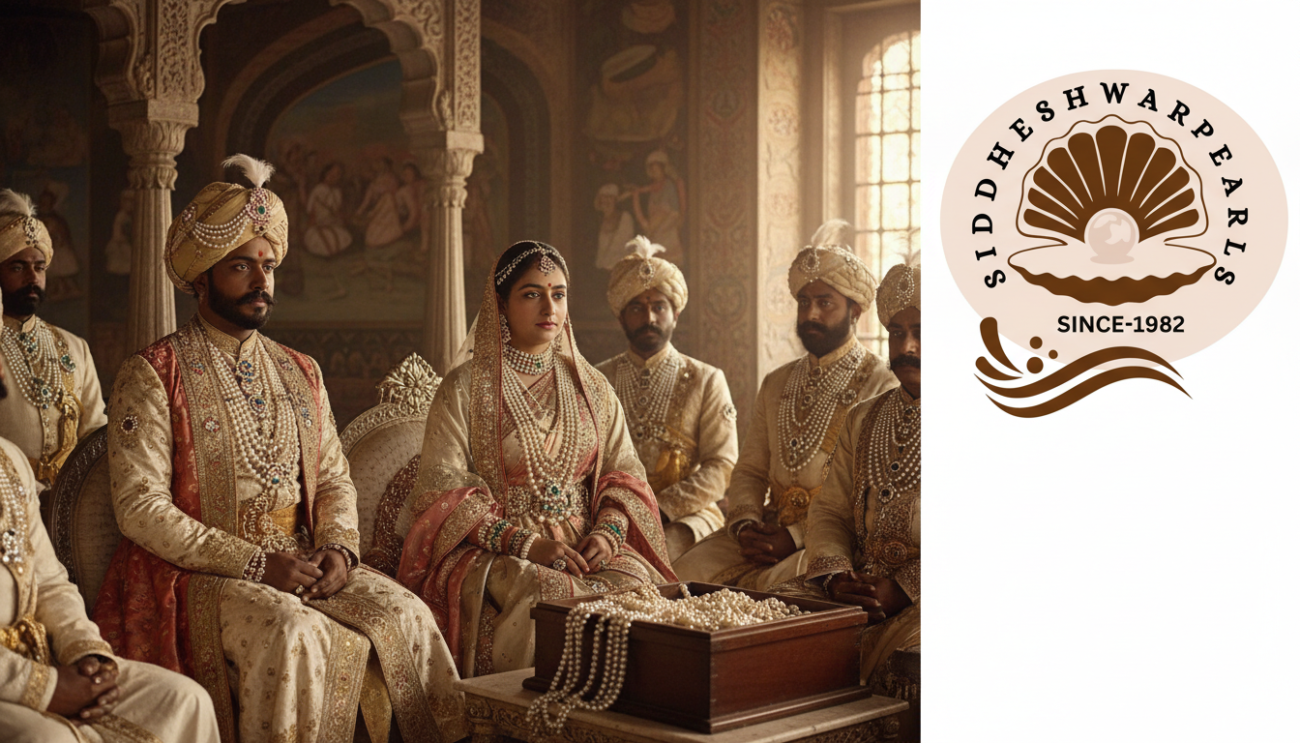
Long before British rule India was already known for its pearl trade. Natural pearls were sourced mainly from the Gulf of Mannar and traded across Asia and the Middle East. Indian kings and queens wore pearl necklaces, earrings, and crowns as a sign of status.
Pearls as a Symbol of Royalty
Pearls were considered sacred and luxurious. They were worn in royal courts and religious ceremonies. Even during the British era, pearls remained an important part of royal fashion among Indian rulers and colonial elites.
The Pearl Trade During British India
Expansion of Trade Networks
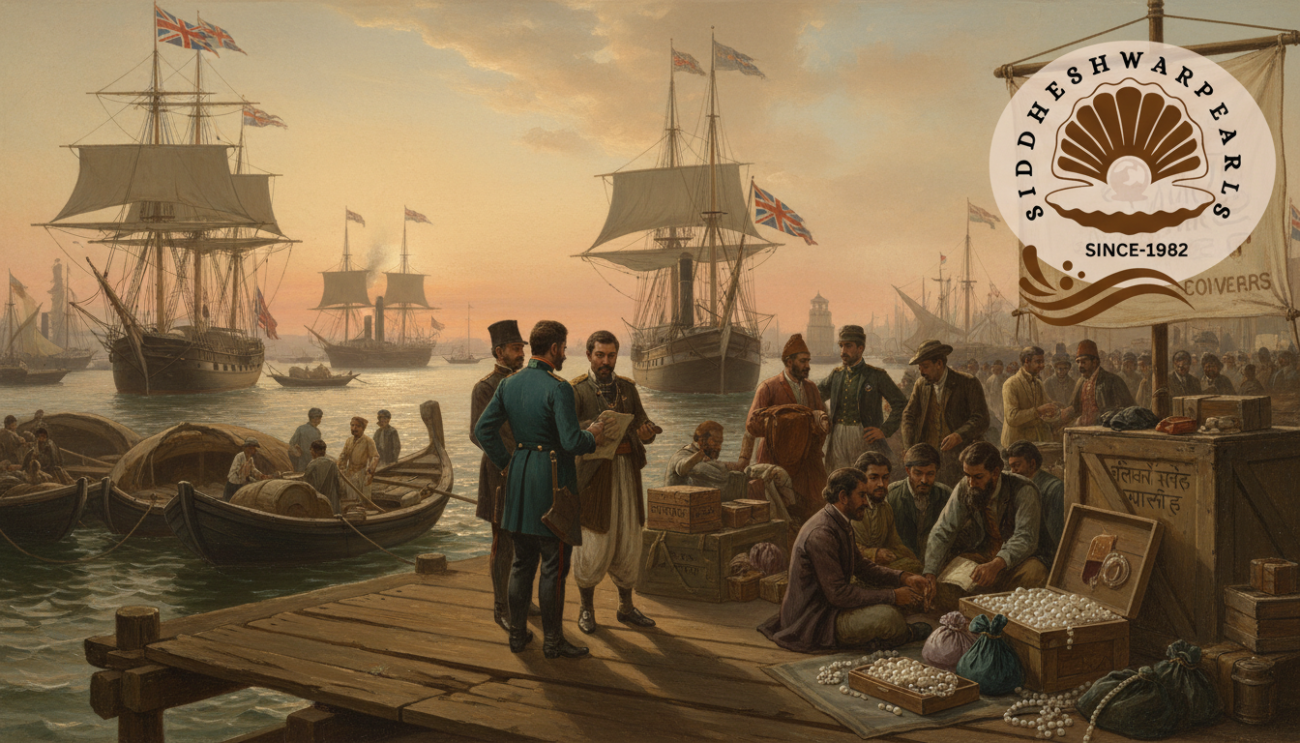
During British rule (1858–1947), trade systems became more organized. The British East India Company and later the British government improved shipping routes and port systems. This helped pearls move easily between India, Europe, and other countries.
Pearls from India were exported to London and other European markets. At the same time, foreign buyers came to Indian cities to purchase high-quality pearl jewellery.
Hyderabad – The City of Pearls
Hyderabad became one of the most famous pearl centers during the British period. The city was ruled by the Nizams, who were known for their love of pearls.
Markets near Charminar became busy trade hubs where merchants sold Basra pearls and other fine varieties. Even today, Hyderabad continues this legacy as the “City of Pearls. And Ocean pearls also known as saltwater pearls, are pearls that are formed inside oysters in the sea
Royal Love for Pearls in British India
Indian Royal Families
The Nizams of Hyderabad were among the richest rulers in the world and had extraordinary pearl collections. They wore multi-layered pearl necklaces, known as satlada and rani haar, during official events.
Influence of British Royal Fashion
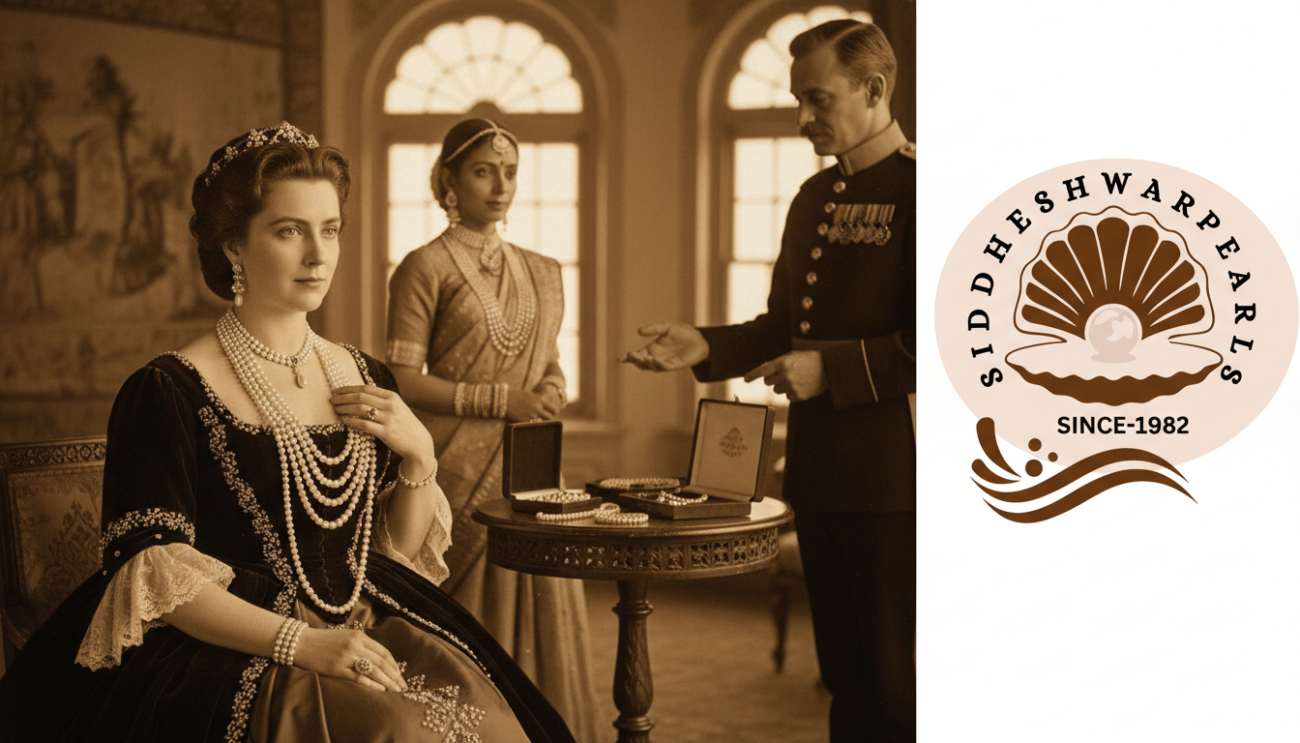
British royalty also admired pearls. Historical figures like Queen Elizabeth I were known for wearing elaborate pearl jewellery. This royal influence increased the demand for pearls in India during the colonial period.
Pearls became fashionable among British officers’ families living in India. They often purchased pearl jewellery as gifts or souvenirs.
Cultural Significance of Pearls
Pearls in Ceremonies and Weddings
In British India, pearls were widely used in weddings and traditional ceremonies. Brides wore pearl necklaces and earrings as a symbol of grace and prosperity.
Religious and Spiritual Meaning
Pearls were also associated with purity and calmness. Many believed pearls brought peace and positive energy.
Types of Pearls Popular During British India
During the colonial period, the following pearls were commonly traded:
Natural Pearls
Basra Pearls
Freshwater Pearls
Saltwater Pearls
Basra pearls were especially valued for their luster and rarity.
Pearl Jewellery Styles in British India
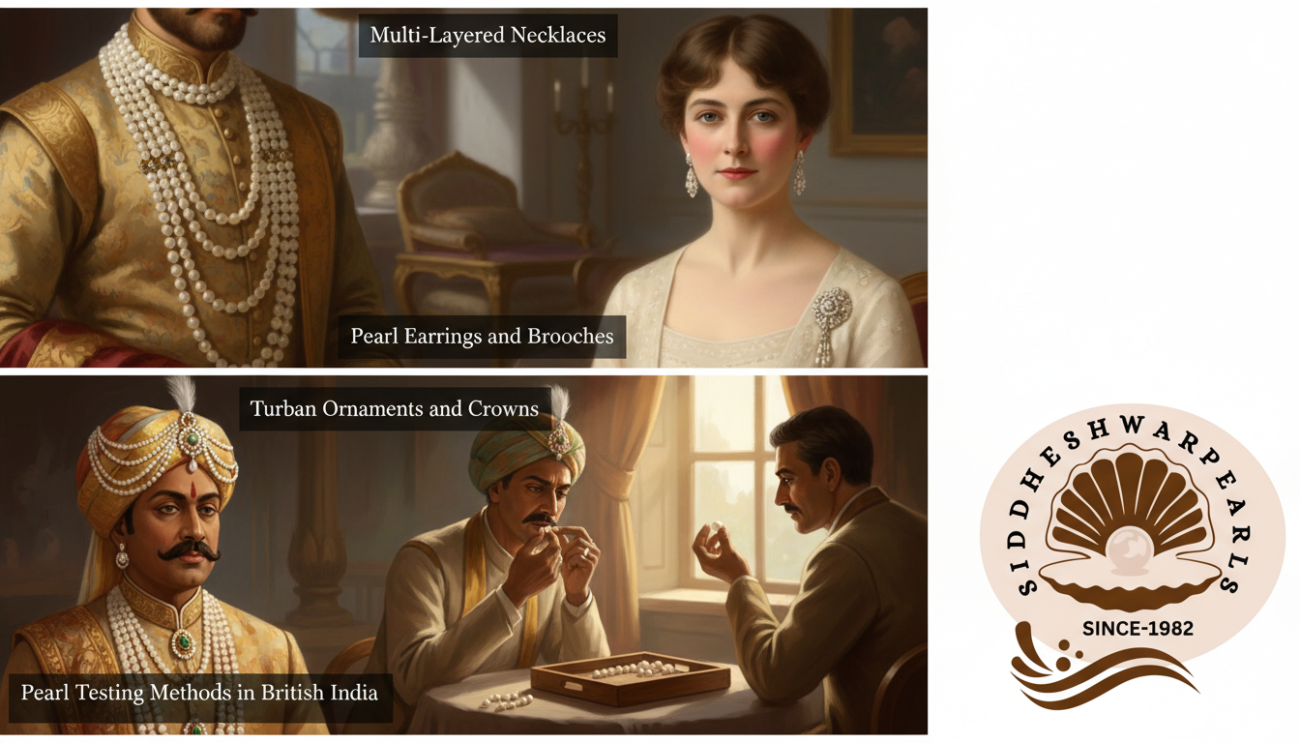
Multi-Layered Necklaces
Long layered pearl necklaces became very popular among royal families. Kings, queens, and nobles wore multiple strands of pearls to show their wealth and status. These elegant necklaces added grace and grandeur to royal outfits and were often worn during important ceremonies and special occasions
British women often chose pearl earrings and brooches for formal gatherings and social events. Pearls were seen as elegant and classy, making them perfect for dinners, royal events, and official meetings. These simple yet beautiful pieces added grace and sophistication to their outfits.
Turban Ornaments and Crowns
Indian rulers decorated their turbans and crowns with pearls to display their power, wealth, and royal status. Pearls added elegance and grandeur to their traditional attire and were often worn during court ceremonies, celebrations, and important public events.
Pearl Testing Methods in British India
Traditional Testing Methods
In olden days, pearl traders used simple methods such as
In olden days traders tested pearls by rubbing them gently against their teeth to feel the texture, as real pearls usually feel slightly rough. They also checked the luster under sunlight to see the natural shine and glow. Another method was carefully observing surface imperfections, since natural pearls are rarely perfectly smooth. These traditional testing methods required experience and skill to identify genuine pearls correctly.
Modern Pearl Testing Methods

Today, scientific methods are used to test pearls accurately. Experts use advanced tools like X-rays and microscopes to check the internal structure of the pearl. Gemological laboratories also provide certification to confirm whether a pearl is natural or cultured. These modern testing methods are more reliable and give clear results.
X-ray examination
Gemological laboratory certification
Microscopic analysis
Organizations like the Gemological Institute of America provide certification for genuine pearls.
The Legacy of Pearls in Modern India
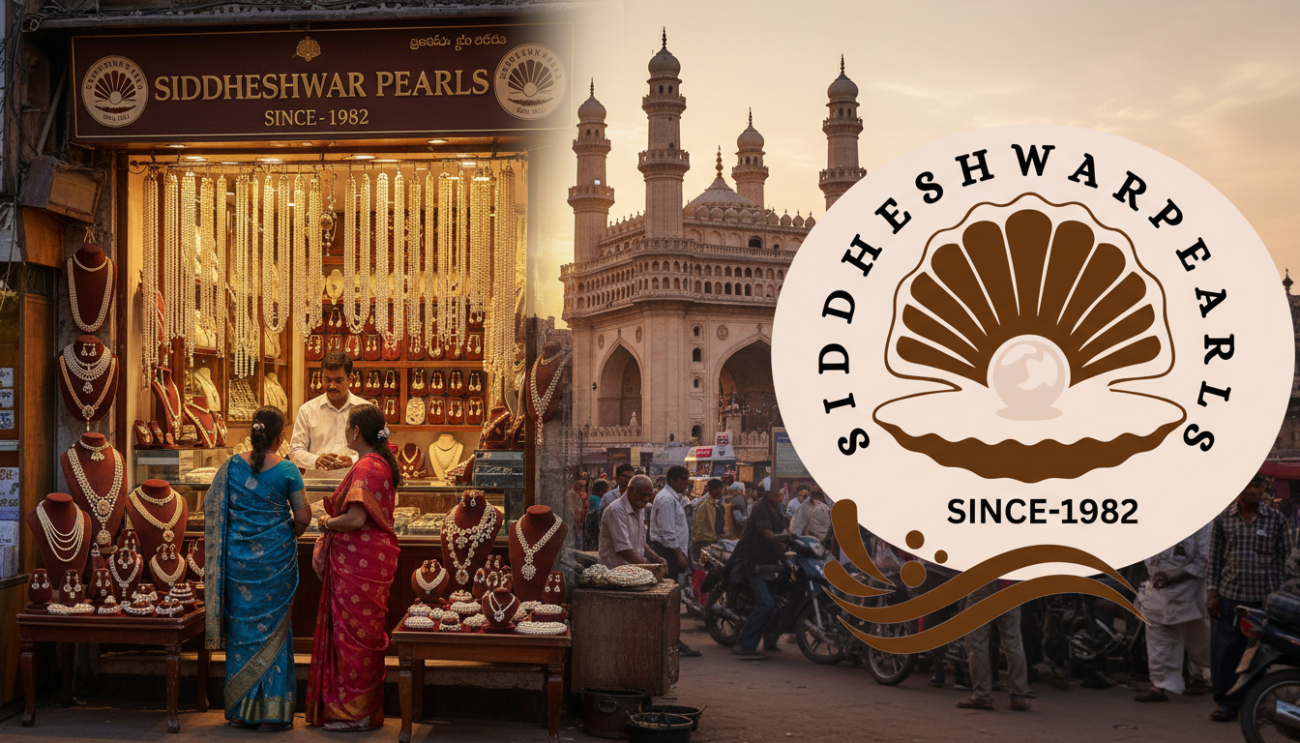
Even after the British period ended in 1947, the cultural importance of pearls remained strong. Hyderabad continues to be a leading center for pearl jewellery.
Near Charminar, many traditional pearl shops still operate, keeping the heritage alive.
If you are looking to buy authentic pearl jewellery in Hyderabad, Siddheshwar Pearls offers a wide collection of certified pearl necklaces, earrings, and bridal sets. Located near Charminar, Siddheshwar Pearls continues the rich tradition of pearl craftsmanship passed down through generations.
Why Pearls Still Matter Today
Pearls are timeless. They suit every generation and occasion. From royal courts in British India to modern weddings and fashion shows, pearls remain a symbol of elegance and prestige.
Whether it is a simple pearl chain or a grand bridal set, pearls add grace to every outfit.
Conclusion
Pearls in British India played a major role in trade, royalty, and cultural heritage. They were symbols of wealth and elegance, admired by Indian rulers and British elites alike. The organized trade system during the colonial period helped pearls reach international markets, strengthening India’s reputation as a major pearl hub.
Cities like Hyderabad especially areas around Charminar became famous for pearl trading and continue to carry this legacy today. From traditional testing methods in olden days to modern scientific certification, pearls have evolved while maintaining their charm.
The cultural legacy of pearls remains strong in India. If you wish to experience this timeless beauty you can explore authentic collections at Siddheshwar Pearls is one of the best pearl shops in Hyderabad located near Charminar.in Hyderabad and become part of a tradition that began centuries ago.